
exploring movement in therapy
movement exploration in therapy
using movement to deepen self-awareness as part of therapy
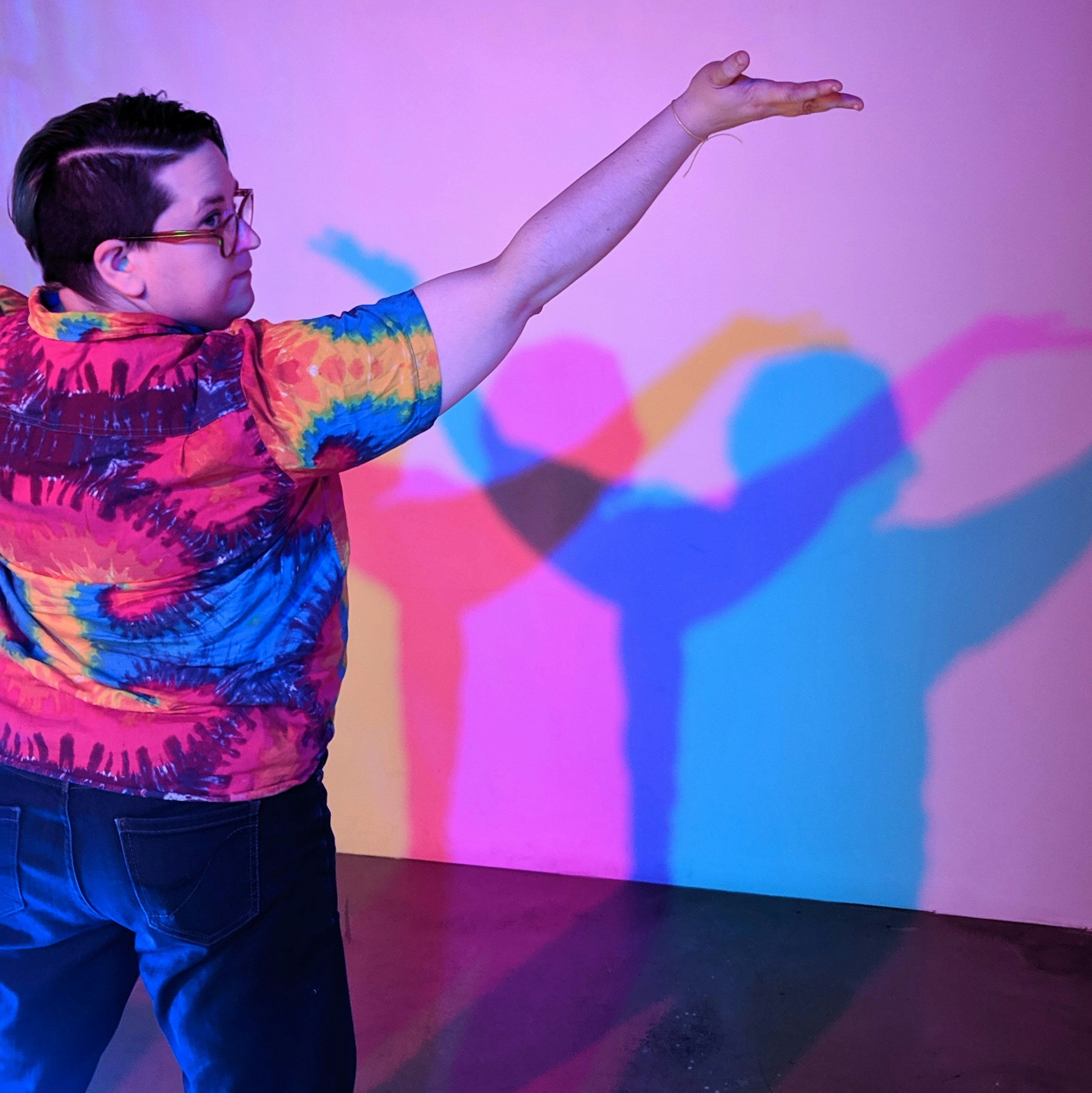
if you’re human, you’re a mover

Movement can bring new parts of our experience into awareness in ways that are different than talking-about.
In our work together, these will be Gestalt therapy sessions — and embodiment is a big part of how I work. Sometimes embodiment can include exploring movement together more explicitly. (Keep reading for examples of what this might look like.)
Exploring movement in the context of a therapy session is a bit different than approaches like physiotherapy or yoga, which often seek to instruct, correct, manage, “work out” or maintain a certain posture or coordination. For us, we don’t have to focus on getting anything “right” or doing it “properly.”
In our work together, we can draw on movement for the sake of deepening your self-awareness, feeling into your experience, and integrating your sensations.
The Co-Creation of the Session
These explorations will arise out of our co-created shared context. This is a fancy way of saying, if and when we decide to try something different than talking-about, whatever movement we choose will be informed by
what we’ve been talking about
what we decide is needed in the moment
desiring a break from intensity
A movement moment could be a guided exploration, after which we process how that was for you.
These explorations don’t have to be directly related to what we are talking about. Movement or gesture is always relevant because it arises out of the co-created moment: what’s happening between us in the session.
Gestalt therapy is not prescriptive, and so neither will these experiments provide a set of instructions for how to “work through” or correct something.
Instead, you might hear me ask:
What do you feel like doing?
Is there anything you’d like to enhance or shift in your body?
We can allow what is already happening to inform our next movement.
Why Movement?
Sometimes a moment of movement in a therapy session can be a relief.
It can be:
A relief to step away from a moment of emotional intensity
Support for staying with a challenging experience without having to talk about it (especially if you feel you’ve been talking in circles)
Support to be with your experience in a new/different way than usual
When words feel tangled or insufficient, your body often already knows something that’s true about the situation. You could be demonstrating this knowing in the way you move your hands (or don’t) when you speak, or in the way your eyes look up and away every time you talk about a certain subject.
Movement can help you:
Get a break from trying to think your way out of a situation by intellect alone
Not have to work so hard to be understood or to understand
Connect the dots between sensation, emotion, and meaning
Sometimes it’s useful to decide: Let’s try something different.
And then we’ll come back together in the way that we’re used to, to talk about how that was for you.
What, if anything, did you notice during that experiment?
Is anything different now? (It doesn’t have to be.)

What Movement Experiments Are (and Are Not)
Exploring movement together as part of our therapeutic work is about trying something different than you’re used to. I like to think of these moments like an experiment: we decide to explore a gesture or new body position as a way for you to tell your story or be with your experience in a way you haven’t tried before. This often leads to new insights or a different perspective about yourself or your situation.
These explorations are not intended to teach you how to “work on” or “improve” something about yourself or your body. There’s a time and place where this can be really helpful, and that’s not what we’re doing here.
A movement experiment can be an opportunity for you to:
Learn something about yourself
Come to your own discoveries and self-knowing
Make meaning out of your experience
Connect the dots
Integrate something that may have felt fragmented or disconnected previously
Movement in therapy is not about doing it “right.”
It is about noticing, deepening, exploring, being-with, resting, enlivening.
As you are reading these words, notice what is happening inside yourself.

What Might Movement Look Like?
We are moving all the time. Even sitting involves the subtle movements of balancing and uprightness.
When we talk about bringing movement into therapy, this means making our movements and gestures more explicit, bringing intention and awareness to the ways that we move that are usually out-of-awareness.
Often these unconscious movements provide information about how we really think and feel about ourselves or a situation.
Movement moments in therapy can be very simple:
Standing and noticing your feet meeting the ground
Exploring the movement of your breath
Bringing awareness to your gestures while you’re speaking
Shifting your body position/shape and noticing what changes
Playing with pacing while speaking or walking
Using subtle/grand guided movements to support a feeling of being settled or grounded in yourself (aka “regulation”)
Experimenting with distance, sense of space, and proximity
Sometimes we move a little.
Sometimes we barely move at all.
Sometimes we explore the whole range of movement available to us in a given moment.
No matter how we move, we are always moving together and in relationship to each other and the world.
How we move matters.
Movement & Embodied, Relational Gestalt Therapy
Gestalt therapy invites present-moment awareness (what is happening now) to our exploration of the past (what has happened) and future (what might happen).
Mostly we will be talking, as this is the way of relating that most of us are familiar with. Speaking is the way of communicating that most of us rely on to feel heard and understood.
In addition to spoken language, embodied relational Gestalt therapy includes paying attention to:
Sensation
Movement
Gesture
Breath
Communication
Expression
Listening
Environment
Every experience we have translates directly into our lived, kinaesthetic experience.
Human beings are adaptive beings. We find myriad ways to adjust and reorient to the ever-changing situation around us.
Sometimes we adapt in ways that were necessary at one time, but no longer serve us. For whatever reason, we can become rigid in our adaptations, and lose access to our full range of possible responses.
Movement explorations can gently illuminate these sticky, rigid, outdated patterns on an other-than-conscious level.
We’re not trying to fix or judge what’s going on, but rather to bring more of ourselves into conscious awareness.
From this heightened awareness, choice becomes possible.
In-Person One:One Sessions (Toronto)
Exploring movement together in a shared space allows for opportunities to feel embodied resonance in community.
In-person sessions allow for embodied exploration through:
movement, gesture, and spatial awareness
sound and voice exploration
Meeting in person allows us to work with everyday activities such as sitting, standing, walking, breathing, and exploring these activities as doorways into awareness and choice.
Virtual One:One Sessions (Ontario)
Believe it or not, embodied work translates easily to online formats.
Virtual sessions support you to explore space and movement within your own environment, using simple, familiar activities. We may work with:
self-touch and guided movement
sound-making and vocal exploration
attention to sensation, breath, and impulse
Online work often deepens self-trust by inviting you to receive information directly from your own body, in the security of your own familiar space.
Who This Work May Support
Movement moments are available to anyone. No previous dance or movement experience required!
If you’re a human, you are a mover. We all move in some way, all the time.
You don’t have to be “good at movement” to benefit - as a human, you are inherently “good” at moving.
Exploring movement in therapy may resonate if you:
Feel limited by repetitive ways of relating to others or your situation
Notice anxiety or overwhelm in your body
Experience dissociation or disconnection
Feel emotionally flooded and need grounding
Struggle to find words for what you’re feeling
Want to deepen your embodied awareness
Are curious about how your body holds experience
We always begin exactly where you are.
This work is not just for dancers or performers (we’re all movers!)
The only requirement for inviting movement exploration into therapy is curiosity about your relationship with your own body.
Frequently Asked Questions About Movement and Therapy
Do I have to move if I don’t want to?
No. Intentional movement exploration is always optional. These experiments arise through co-creation and consent. We move in a new way only if it feels supportive. And even if we try something out, you get to change your mind at any time!
Is this like dance therapy?
No. While we may explore movement, this is not dance therapy. These are Gestalt therapy sessions where movement may be one of many relational, embodied experiments.
What if I feel self-conscious?
That makes sense. Self-consciousness itself can become part of the exploration. There is no performance expectation. What if you didn’t have to be “good enough”? What might be possible if you were exploring for the sake of curiosity and getting to know yourself better?
How is this different from exercise?
Movement in therapy is not about fitness, posture correction, or achieving a physical goal. It is about awareness, meaning-making, experimentation, curiosity, intention, spontaneity, and even play.
Can movement help with anxiety?
Yes. Many people experience anxiety primarily in their bodies. Gentle embodied exploration can support settling, enlivening, integration, and increased energy.
Will movement replace talking?
No. We move and then return to talking about the experience. We explore, and then we process. Both are important.
What if nothing changes?
That’s okay. The question is not “Did something change?” but “What did you notice?” Sometimes subtle awareness is the change.
If you’re curious about exploring movement as part of embodied, relational Gestalt therapy in Toronto or online across Ontario, I invite you to reach out.