


embodied therapy
somatic, body-based therapy
embodied work can support experiences such as anxiety, overstimulation, trauma, and relational wounding
what is embodied therapy?
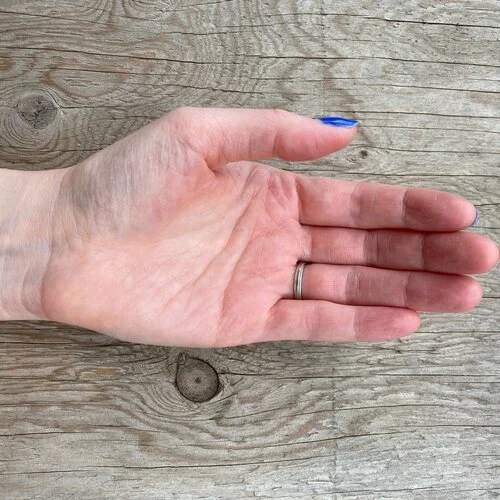
“touch” is not always physical - we reach for and are reached by each other with all of our senses
Embodied therapy invites you to slow down and listen inward—sensing how your body, relationships, and past experience shape how you move through the world.
The point of touch is where something comes back to life.
- Gianni Francesetti
It’s not about fixing or changing yourself, but about trusting your experience, your body, and your own waking up to what is.
“Embodied” experience includes our:
gestures
sensations
movements
facial expressions
thoughts
feelings
what does it mean to “ground” yourself?
In therapy, grounding refers to the ability to feel present, steady, and connected to your body in the midst of stress, anxiety, trauma, or emotional intensity. Quite literally, ground is what lies beneath our feet: the physical support of the floor, the chair, the environment around us. Psychologically, it also refers to the underlying foundation of your current experience: the circumstances you are living in, the season of life you are navigating, and the truths that may be asking for your attention.
Grounding is not about forcing calm or eliminating discomfort. It is about orienting to what is actually happening.
When we are overwhelmed, dissociated, anxious, or stuck in repetitive thought patterns, we often lose contact with our physical sense of support. We may feel unsteady, overwhelmed, or disconnected from ourselves. Grounding awareness helps re-establish contact with the present moment and support yourself to feel more settled and available (aka nervous system regulation).
This might include:
Noticing your feet on the floor
Feeling yourself in your chair
Paying attention to what you see, hear, or sense around you
In Gestalt therapy, grounding is not just a coping strategy. It is foundational to building awareness. Gestalt therapy emphasizes present-moment experience: what is happening now in your body, emotions, thoughts, and relational field. Awareness helps us begin here.
We might explore:
What are you aware of in your body right now?
Where do you feel support?
Where do you notice ease? not-ease? Can you describe these qualities? (heavy/light, bound/free, etc.)
What shifts when you let your feet fully meet the ground?
This type of awareness builds your capacity to stay with discomfort or difficulty. It supports your ability to flow through emotion fluidly (aka emotional regulation), and helps you notice when/how you are coming and going (aka dissociation). It allows you to engage in what might feel like a “courageous conversation” - with yourself, with another, or with your circumstances - from a place of steadiness.
Ground is what holds and supports you, but it can also reveal what is true: where you are, what your body is responding to, and what may be emerging in your life. In embodied, relational Gestalt therapy, we do not judge or try to fix this foundation. We learn to stand on it.
From awareness of your ground, choice becomes possible.
GROUND
is what lies beneath our feet.
It is the place where we already stand;
a state of recognition, the place or the circumstances to which we belong whether we wish to or not.
Visible ground beneath our feet calls up the unexplored invisible terrain inside us which has yet to be made visible.
Ground is what holds and supports us, but also what we cannot recognize or do not want to be true;
it is what challenges us, physically or psychologically, irrespective of our hoped for needs.
It is the living, underlying foundation that tells us what we are, where we are, what season we are in and what, no matter what we wish in the abstract, is about to happen in our body, in the world or in the conversation between the two.
To come to ground is to find a home in circumstances and in the very physical body we inhabit in the midst of those circumstances
and above all to face the truth, no matter how difficult that truth may be;
to come to ground is to begin the courageous conversation - to step into difficulty and by taking that first step, begin the movement through all difficulties -
to find the support and foundation that has been beneath our feet all along:
a place to step onto, a place on which to stand and a place from which to step.
...
‘GROUND’
(spacing and emphasis my own)
from “CONSOLATIONS: The Solace, Nourishment and Underlying Meaning of Everyday Words.”
Revised Edition: © David Whyte and Many Rivers Press 2020